How Ambient Lighting Changes the Mood of Your Home
Have you ever walked into a room that looked perfectly decorated on paper, yet felt cold and uninviting in person? That disconnect is rarely about the furniture or the paint. It almost always comes down to lighting. A single decorative floor lamp placed thoughtfully in a corner can do more for a room's warmth than an entire wall repaint. Light does not just help you see a space, it determines how that space makes you feel.
Ambient lighting is the layer of light that most Indian homes overlook. Ceiling fixtures light up a room, but they rarely make it feel like home. Ikari Homes designs handcrafted lamps built around the idea that soft, intentional light transforms ordinary rooms into spaces worth coming back to. Understanding how light works is the first step to getting your home to feel the way you always wanted it to.
Does Your Room Feel Off Even After Decorating?
Most people assume that once the furniture is in place and the walls are painted, the room is done. But many well-decorated homes in India still feel flat or uncomfortable to sit in for long. The reason is almost always the same, the lighting has not been thought through.
-
The problem with overhead lights
Ceiling lights flood the entire room from one direction and remove depth in the process. A room without shadow has no dimension. It ends up looking like a showroom rather than a space someone actually lives in.
-
Where ambient lighting comes in
Ambient lighting works at a lower level, closer to where people sit and interact. It creates soft pools of light rather than one harsh wash from above. The room begins to feel layered, warm, and considered.
Why this matters in Indian homes
The living room in most Indian homes serves multiple purposes, evening conversations, unwinding after work, and hosting guests. A space used this way deserves light that adjusts the mood, not just the visibility. Getting that right does not require renovation. It starts with understanding what your space actually needs from its light sources.
What Does Light Actually Do to a Room's Mood?
Not all light sources work the same way. The type of light, its direction, and its position in a room each play a different role in shaping how the space feels. Most people pick a light fitting based on how it looks. But what matters just as much is what that light does once it is switched on.
The table below breaks down how different light sources behave and where each one earns its place.
|
Light Source |
Effect on Mood |
Best Placement |
|
Harsh overhead ceiling light |
Creates a flat, clinical feel. Removes depth and warmth from the room |
Utility areas, kitchens, corridors |
|
Warm ambient ceiling light |
Softens the overall room tone but still lacks intimacy at ground level |
General base layer for any room |
|
Decorative floor lamp |
Adds visual height, sculpts corners, and creates a warm, focused glow at seated eye level |
Living rooms, bedrooms, and reading corners |
|
Wall lamp |
Highlights surfaces and adds depth to blank walls |
Accent layer alongside other sources |
|
Table lamp |
Creates a close, personal pool of warmth |
Bedside tables, study desks, side tables |
Which Corners of Your Home Need Ambient Light the Most?
Knowing that lighting matters is one thing. Knowing exactly where to place it is what makes the difference. Most homes have one or two light sources doing all the work, leaving large portions of the room dim and flat. Good floor lamp placement ideas are less about aesthetics and more about understanding how people use each space.
Here is a room-by-room breakdown of where ambient light has the most impact.
Living Room
-
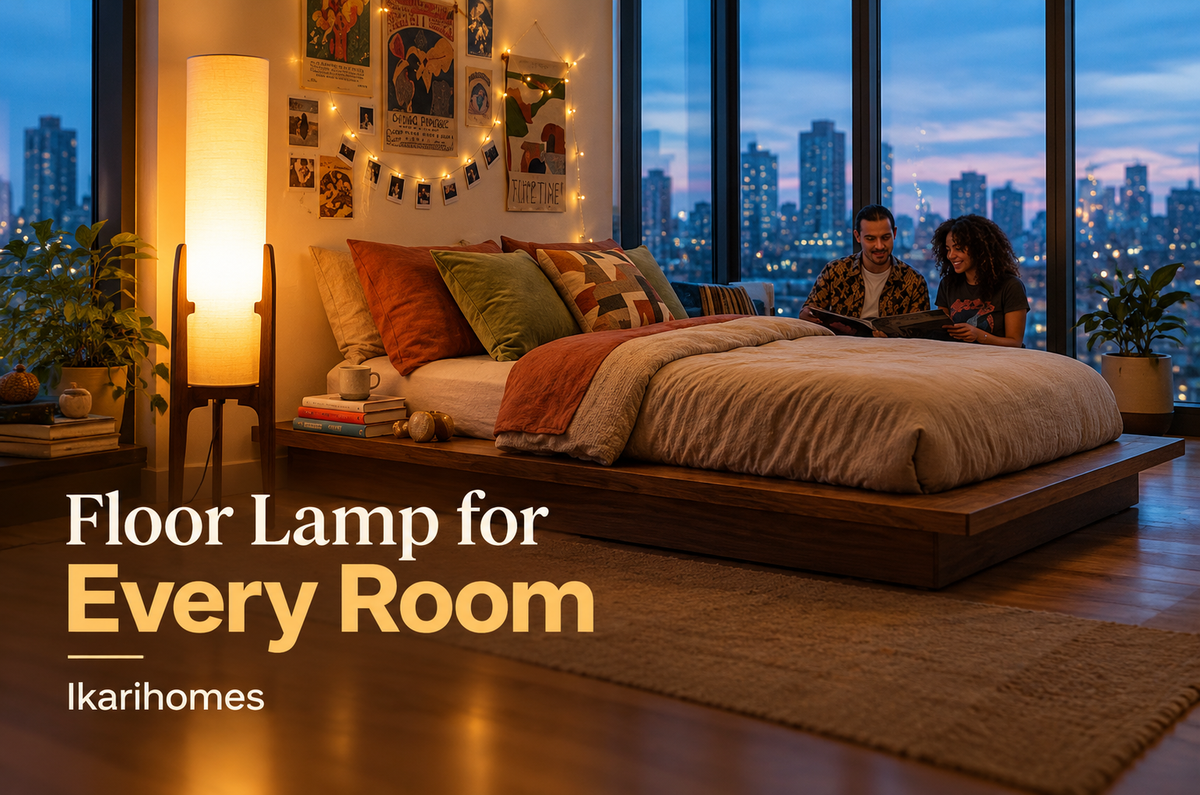
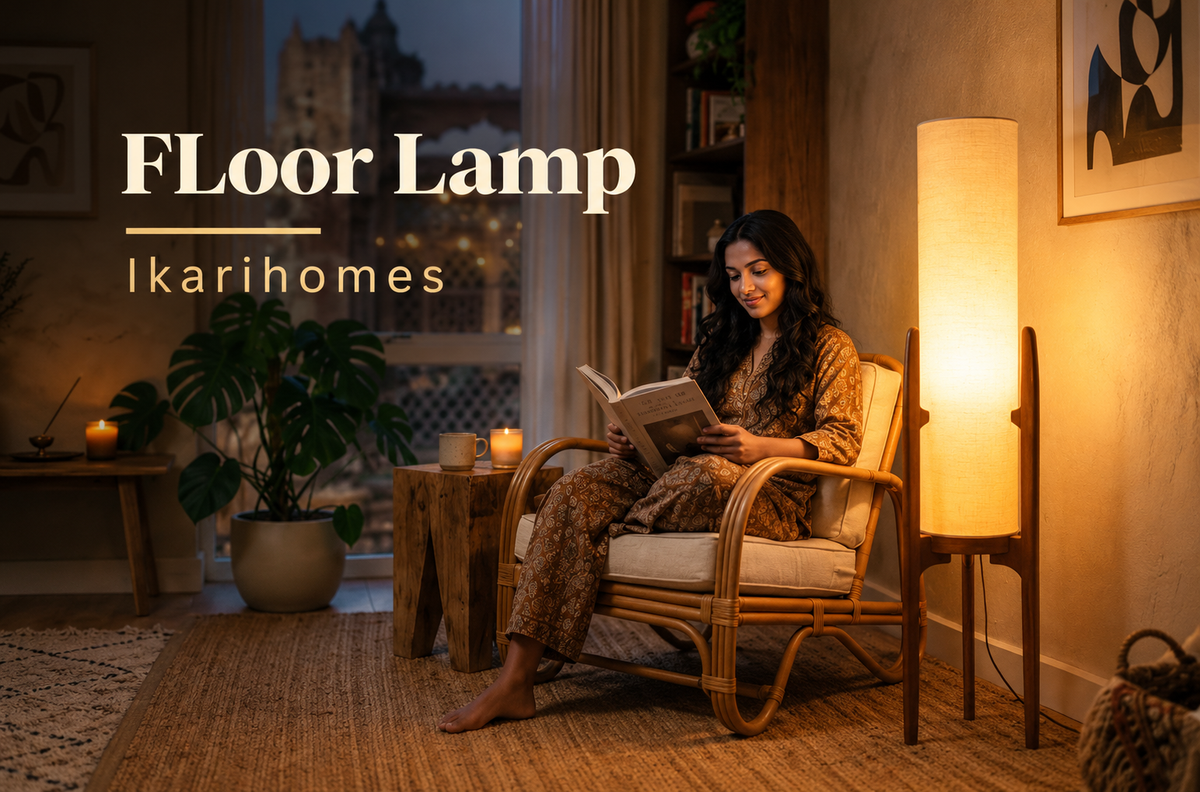
Place a decorative floor lamp in the corner behind or beside the sofa, not in the centre of the room.
-
Side lighting at seated height creates warmth and depth that ceiling lights simply cannot replicate.
-
Avoid pushing the lamp against the wall, a few inches of gap allows light to bounce and spread.
Bedroom
-
Position a floor lamp on one side of the bed as a soft alternative to a harsh bedside bulb.
-
Warm light in the bedroom supports wind-down and makes the space feel restful.
-
Avoid overhead-only setups in bedrooms, they work against the mood the room is meant to create.
Study or Work Corner
-
A soft floor lamp placed behind the desk reduces screen glare and eye strain.
-
Pairing it with a focused task lamp creates a layered effect that is both functional and comfortable.
Entryway or Foyer
-
The first space a guest enters sets the tone for the entire home.
-
A tall, well-crafted lamp here signals warmth and intention before anyone steps further inside.
Does the Colour of Light Really Change How a Room Feels?
Most people choose a bulb based on brightness alone. Very few think about colour temperature, even though it is one of the biggest reasons a room feels either comfortable or unsettling. Getting this right costs nothing extra. It just requires knowing what to look for.
Warm white vs cool white: What is the actual difference?
Bulbs are measured in Kelvin. A lower number means warmer, more golden light. A higher number means cooler, more blue-toned light.
|
Colour Temperature |
Feel |
Best Used In |
|
2700K to 3000K |
Warm, soft, relaxed |
Living rooms, bedrooms |
|
3500K to 4000K |
Neutral, balanced |
Dining areas, hallways |
|
4000K and above |
Cool, alert, clinical |
Kitchens, study zones |
For most living spaces, 2700K to 3000K is the sweet spot. It feels soft without being too dim and adds a natural glow to surfaces like wood, fabric, and stone. Using cool white bulbs in a living room or bedroom is one of the most common lighting mistakes in Indian households, the room ends up feeling like a workspace rather than a place to unwind.
Why the shade material changes everything
The shade of a lamp changes the quality of light just as much as the bulb inside it. A bare bulb throws direct, harsh light in one direction. A shade made from rattan, raffia, or woven fabric filters that light and spreads it softly across the room.
Where Can You Find a Decorative Floor Lamp That Actually Changes Your Home's Mood?
Ikari Homes builds handcrafted lamps designed around one core idea that the right light source should do more than illuminate, it should make a space feel like it belongs to the person living in it. Every piece in the collection is made with natural materials that work with light, not against it. If you have been looking for living room lighting ideas that go beyond the ordinary, Ikari Homes offers something with real warmth and character.
-
Natural material shades: Rattan, raffia, and woven fabric shades diffuse light softly across the room, creating the kind of layered ambient lighting that synthetic fittings rarely achieve.
-
Floor lamp height designed for living spaces: Each lamp is built to sit at seated eye level, which is exactly the height where warm light has the most impact on how a room feels.
-
Crafted to anchor a corner: Every lamp is designed to work as both a light source and a visual element, so it earns its place in the room even when switched off.
-
A range built around mood, not just brightness: From artisan floor lamps to woven pendant lights, the collection is structured around creating warmth in specific spaces rather than simply adding more light to a room.
Bring Warmth Into Every Corner
A room's mood is never accidental. It is the result of deliberate choices, and lighting is the most powerful of all of them. The right ambient lighting does not just fill a space with light. It gives the room a character that furniture alone cannot create.
Ikari Homes brings that warmth through handcrafted lamps built from natural materials that work with light in the most genuine way. If your home deserves to feel as good as it looks, start with the light. Explore the Ikari Homes floor lamp collection and bring the warmth home today.